
Infrastructure & Technology
We operate with a powerful and fully integrated production setup designed to deliver accuracy, speed, and world-class packaging quality.
Design & Quality
- In-house Design Studio for premium branding
- Dedicated QA Laboratory ensuring durability, seal strength, and safety
Printing Machine
- Speed - 300m/s
- NOS - Four high speed machine
- Make - Pelican & Fadia
A tapeline machine (more commonly known in the
industry as a tape line or tape extrusion line) is a
large-scale industrial manufacturing system used to
produce synthetic tapes or yarns from plastic
granules.These tapes are the “building blocks”
for products like woven sacks.
Tapeline
- Speed -
- Nos - Two High Speed Machine
- Make - Lohia
A tapeline machine (more commonly known in the
industry as a tape line or tape extrusion line) is a
large-scale industrial manufacturing system used to
produce synthetic tapes or yarns from plastic
granules.These tapes are the “building blocks”
for products like woven sacks.
Looms
- Speed-
- Nos - Hundred High Speed Machine
- Make - Lohia
A loom is an industrial or manual machine designed to
weave individual threads or plastic tapes into cohesive
fabric. By holding a set of longitudinal threads
(the warp) under high tension, the machine uses
a mechanical “shedding” process to create a gap,
allowing crosswise threads (the weft) to be interlaced
at right angles. While traditional looms produce flat
textiles for clothing and upholstery, modern circular
looms are specifically used in industrial packaging
to weave seamless tubes of fabric for products like
cement bags and heavy-duty sacks.
Lamination
- Speed-
- Nos - Two High Speed Machine
- Make - Navrang
A Lamination Plant is an industrial setup used to apply
a thin, protective plastic coating (usually Polypropylene
or Polyethylene) onto the surface of woven fabric
produced by a loom. This process, known as extrusion
coating, involves melting plastic granules and
spreading them over the fabric to make it waterresistant, leak-proof, and extra durable. For products
like salt, sugar, or chemical bags, lamination is
essential because it seals the gaps between the
woven tapes, preventing fine powders from leaking
out and protecting the contents from moisture.
Bag Conversion System
- Speed-
- Nos - Six High Speed Machine
- Make - Lohia
Bag Conversion System. This is the final
stage in the production line where the rolls of woven
fabric produced by the looms are transformed into
finished bags. The machine automatically performs
a series of high-speed tasks: it unrolls the fabric,
cuts it to a specific length, folds the bottom, and
stitches or heat-seals it to create a functional sack.
Modern BCS units are often “heat-cut” systems that
prevent the plastic tapes from fraying, ensuring the
bags are durable enough for heavy materials like
cement, grains, or chemicals
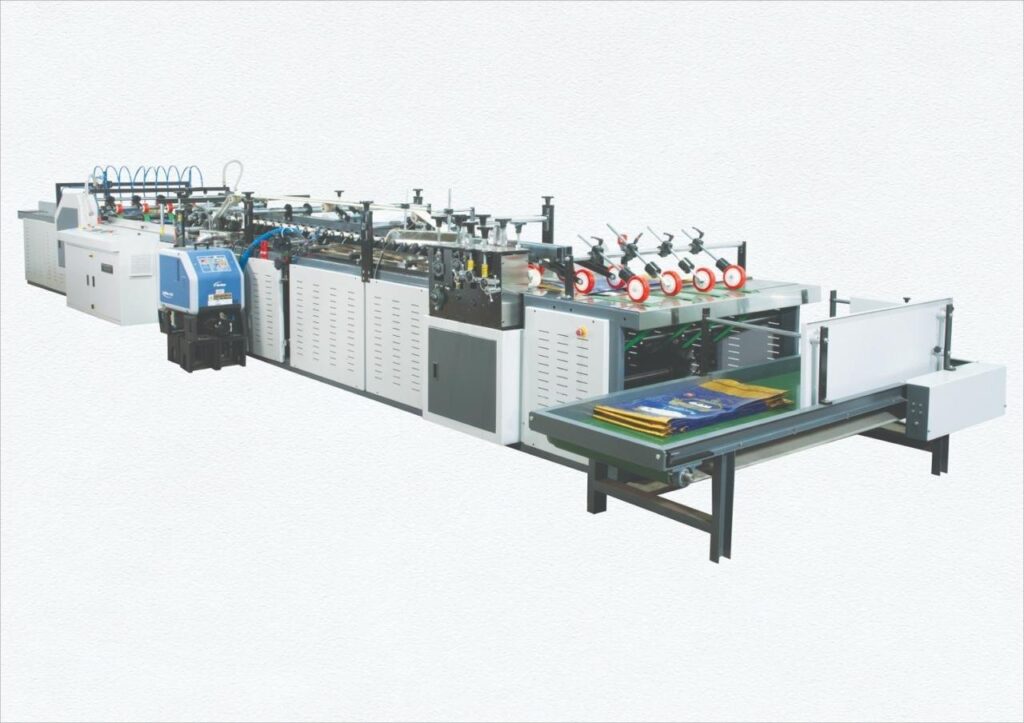
PINCH BOTTOM
A pinch bottom bag is a versatile and durable packaging solution, widely
favored for medium to large-scale industrial and retail applications. Its
name comes from the way the bag is sealed: the bottom is folded over
and “pinched” shut using hot-melt adhesive, creating a strong, sift-proof
closure that prevents fine powders or granules from leaking.
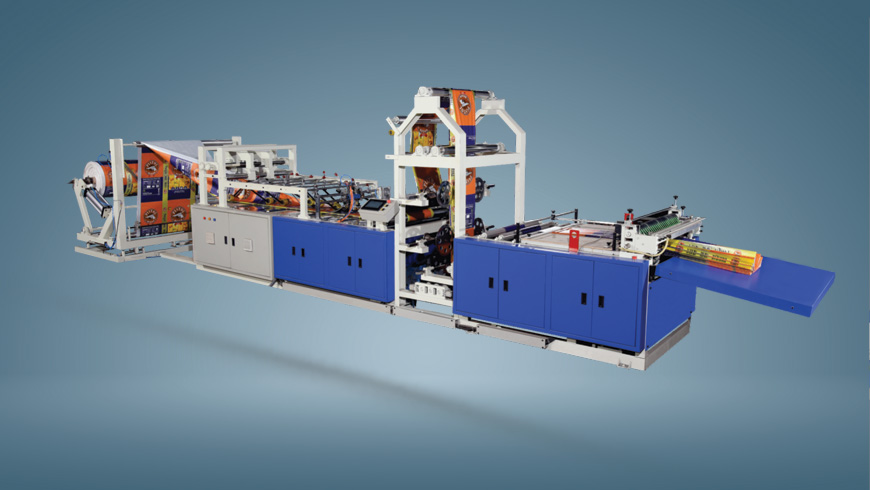
Tubular Bag Machine
A Tubular Bag Machine (often part of a “Bag
Conversion System”) is the specialized equipment
used to process the continuous circular-woven
fabric into individual, ready-to-use sacks. In a
woven sacks plant, this machine pulls the “tube”
of fabric from a large roll, precisely cuts it to a
pre-set length—usually using a heat-cutter to
cauterize the edges and prevent fraying—and
then moves the piece to the sewing or sealing
station. Because the fabric is already woven in
a tube on a circular loom, this machine eliminates
the need for side seams, resulting in a stronger
bag that can withstand the high internal pressure
of heavy materials like grain, sand, or cement.
Tubular Bag Machine
Speed –
Nos – One High Speed Machine
Make – Navrang